

Beginner Storyteller Guide
The beginner Storyteller guide gathers what you need to prepare and run a first game of Dungeons and Kittens as the Storyteller.
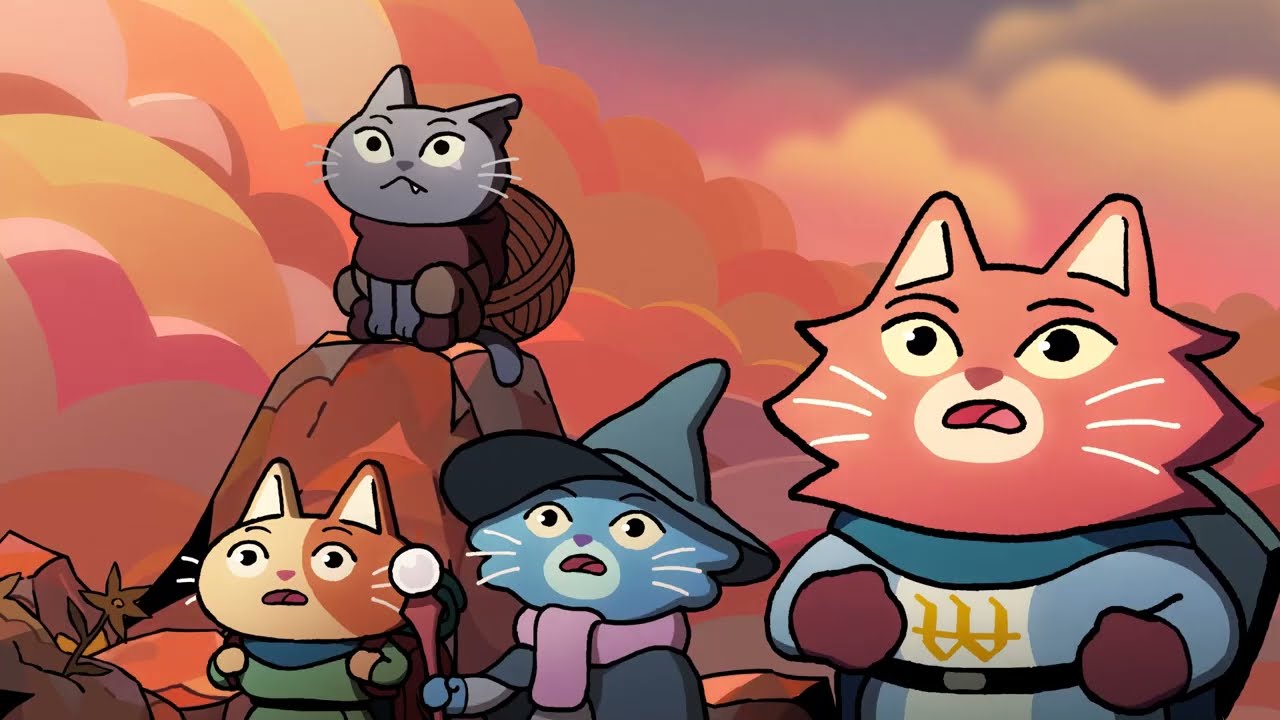
The Dungeons & Kittens animated series, in development, has a trailer:
Playing here sets YouTube cookies.
Glossary
- Storyteller: the game leader. She describes the world, plays the extras and arbitrates the rules.
- Player: anyone at the table, without presuming their gender.
- Kitten: the character the player embodies in the game world.
- Extra: a non-player character (NPC) or creature the Kittens meet.
The world of Dungeons and Kittens
Dungeons and Kittens takes place in a world the humans have vanished from, and no one knows why. Rumors still speak of "big-bare-butts", furless giants said to live in hiding. Vegetation has covered the ruins, and the humans left the animals a legacy: speech, imagination and the ability to invent.
Two kinds of creatures live side by side:
- animals, who talk, walk, wear clothes and use tools
- beasts, who stayed wild and provide leather, milk and meat
A law everyone respects forbids an animal that talks from eating another.
The setting blends animal fables, fantasy Middle Ages and the remains of a vanished world. Cats practice meowgic, from small everyday spells to the arcane arts of the old masters, while other animals tinker with the objects the humans left behind.
A few places to know
- Cat Tree City: the capital of the Kingdom of Cats, a vertical fortress where the floor a family lives on shows its social rank.
- Corktown: a free port city, overcrowded and dirty, that draws sailors, merchants and pirates.
- Bigwheel: a former amusement park run by the raccoon Dualeaper.
- The Junkyard: an open-air dump, stronghold of the Yardogs.
- Crimsonfief: the dungeon the game is named after, different with every visit.
The context of the Exile
The Kingdom of Cats is ruled by King Walter, a fat, hot-tempered and unjust tyrant. He reigns through fear: taxes are heavy, the guard all-powerful and justice swift. His most unjust law is the Exile of Kittens.
On dates only he understands, Walter draws lots for the Kittens who must leave the Kingdom, and everyone knows the draw is rigged. A sham celebration then gives them a quest: come back with a treasure worth the name to earn the right to return. Behind this pretext of an initiatory quest, the Exile punishes families, and the threat of seeing one's children sent away silences all protest.
Walter's instructions are often vague, incomplete or false, and many young cats grow up in exile after giving up on the quest. The Kittens set off with their travel bag and five Purr-ecious items.
Sooner or later, your players will have to choose: try to bring back the treasure, seek to overthrow Walter, or build a new life far from the Kingdom.
Where to start
For a first game as Storyteller, an official scenario spares you from writing the story while you discover the world and the rules.
For a one-shot as for a campaign, two starting points work: the Starter Set or the scenario The Disappearance of Grandma Scramble from Book 1: Core Rulebook.
You can also play the departure from Cat Tree City, with the announcement of the Kittens drawn by lot, then let the group choose its direction and guide it toward the locations of the world.
Preparing your game
Reading and rereading the game material
A single read is not enough. The first gives you an overview. The next ones help you spot the rules your scenario needs and take in the tone of the world.
After reading, test a rules situation with a pre-generated character sheet to make it stick.
You do not need to know everything by heart. Spot the rules that are bound to come into play and set the others aside for now. If you get stuck during a session, improvise a logical solution and note the question to check afterward.
Before the session
- Reread the scenario and note each extra's motivations.
- Sketch a small outline of the flow, on paper or as a mind map (
Obsidian,
 Miro).
 - Prepare an ambient playlist, for instance on
 tabletopaudio.com, YouTube or Deezer.
 - Check in with your players a few days ahead to confirm the date.
Opening the first scene
Rather than a long presentation of the world, start with a scene where the Kittens have to react. Information about the world comes afterward, in answer to their questions.
Two possible openings
Option 1: the Exile ceremony
You play the public announcement of the names of the Kittens drawn by lot in front of the whole Kingdom, then their forced departure. You can show the families kept back by the guards, so that the players feel the injustice from the very first scene. This emotional opening works well to launch a mini-campaign.
Option 2: the first night (The Disappearance of Grandma Scramble)
On the first night of their exile, the Kittens seek shelter with Grandma Scramble, an old cat who takes in exiles for the night. You can have them arrive worn out and soaked by the rain. Among the extravagant henhouses around her cabin, they find the door open, the fire out, everything upside down, and Grandma Scramble gone.
Whichever option you pick, set the scene in two sentences, then ask: "What do your Kittens do?"
Running the table
Letting the players fumble
A wobbly stretch at the start of a game is normal. The more the Kittens ask questions and stir things up, the closer they get to the plot. Always answer a question, even with a riddle or a half-clue.
Immersion
A few short sensory details are enough: the smell of spices in an inn, the damp cold of a metal door, the rain on the tiles. As the core book suggests, you can also turn the questions back on the players: "What does this path look like? Who are the inn's customers?"
The game rests on mutual aid and empathy. Introduce an extra in distress early (a desperate mother, an unfairly treated child): it gives the Kittens a first reason to act.
The Fang Catfight (threats, arguments, bluff) is the most common. Build your scenes so that cunning and solidarity often work better than force. The Claw Catfight and boss fights are covered in the Storyteller FAQ, section "Fights and confrontations".
Handling the unexpected
The most common situations (an unprepared place, a mistake on your part, a group that refuses to follow the scenario) are covered in the Storyteller FAQ.